

 Copy to clipboard
As orthopedic implant designs continue to evolve, materials — not just geometry or instrumentation — are defining performance, longevity and patient outcomes.
Advances in porous coatings, stainless steels and surface technologies are allowing engineers to address longstanding challenges such as metal sensitivity, wear, fixation and stress shielding, while supporting more active patients with longer implant lifespans.
That shift reflects how implant performance expectations have changed alongside patient demographics and clinical goals. Today’s total joint replacement patients are younger, live longer and expect to return to higher levels of activity sooner than ever before. Across orthopedics, advanced materials are designed to meet these goals.
Proprietary surface transformations, advanced porous structures and additive manufacturing techniques are allowing companies to tailor implants for durability, biologic fixation and patient safety. Alternative alloys, advanced surface technologies and new approaches to fixation are increasingly shaping how implants are designed and validated.
For companies competing in a crowded market with few groundbreaking advances in implant design, materials innovation has become a competitive differentiator.
Carpenter Technology’s BioDur 108 exhibits high strength and toughness, making it suitable for load-bearing applications such as hip and knee implants.
Preventing Adverse Reactions
One of the most immediate drivers of material change has been the need to address patient sensitivity to traditional implant metals. Patient reactions have prompted renewed interest in alternatives that maintain strength and wear resistance without compromising biocompatibility.
At the same time, manufacturers face pressure to ensure that new materials meet or exceed the performance benchmarks of legacy alloys.
According to Joe Urban, Global President of Knees at Zimmer Biomet, this challenge was central to the development of the company’s Persona SoluTion PPS Femur, which features a porous coating for cementless fixation and leverages a proprietary surface treatment that’s designed to enhance wear performance.
“Immunological reactions are most common to nickel, cobalt and chromium,” Urban said. “Traditional femoral components often rely on cobalt chrome alloys, which can pose risks for patients with sensitivities to these materials.”
Urban noted that efforts to replace cobalt chrome required careful engineering to preserve fatigue strength, wear resistance and compatibility with existing implant systems.
Smith+Nephew cites that similar clinical and demographic pressures are driving its materials strategy. To address both wear and metal sensitivity, the company developed OXINIUM technology.
Luis Davila, Senior Vice President of Orthopaedics R&D at Smith+Nephew, said OXINIUM, which is used for hip and knee implants, is made from a zirconium/niobium alloy that undergoes a surface transformation that integrates with the metal substrate. The implant-bearing technology has the wear properties of ceramic and the strength of metal, while eliminating the risk of catastrophic fracture seen in monolithic ceramics.
The material contains virtually no cobalt, nickel or chromium, making it a viable option for patients with metal sensitivities. “OXINIUM devices also offer improved in vitro biocompatibility compared to cobalt chrome alloys, reducing the impact on inflammatory response,” Davila said.
Implant manufacturers are also paying closer attention to elastic modulus and load transfer — factors that influence stress shielding and bone remodeling. Reducing stiffness mismatch between implant and bone has become an increasingly important design consideration.
“The zirconium substrate in OXINIUM devices has roughly half the elastic modulus of cobalt chrome, which may help to reduce the risk of stress shielding,” said Tim Bourne, Vice President, Global Marketing Knees at Smith+Nephew.
Heightened regulatory requirements are impacting implant material choices and will play a critical role in how the industry continues to move forward, according to Ray DeFrain, Global Manager of Regional Metallurgy at Carpenter Technology.
That’s especially true in Europe, where the EU Medical Device Regulation (MDR) has introduced stricter controls around chemical composition, labeling and clinical evaluation. Under MDR-related chemical substance controls, cobalt is classified as a carcinogen, mutagen and reproductive toxin, which can affect labeling and compliance requirements.
According to DeFrain, those changes are forcing OEMs to rethink long-standing material choices. “Up to 15% of the population is sensitive to nickel and cobalt,” he said.
In response, Carpenter developed BioDur 108, a nickel-free, cobalt-free, nitrogen-strengthened stainless steel that’s designed to deliver high strength, corrosion resistance and biocompatibility while aligning with MDR requirements. BioDur 108 is engineered to stabilize its microstructure using nitrogen and manganese rather than nickel, maintaining a fully austenitic structure without relying on restricted elements.
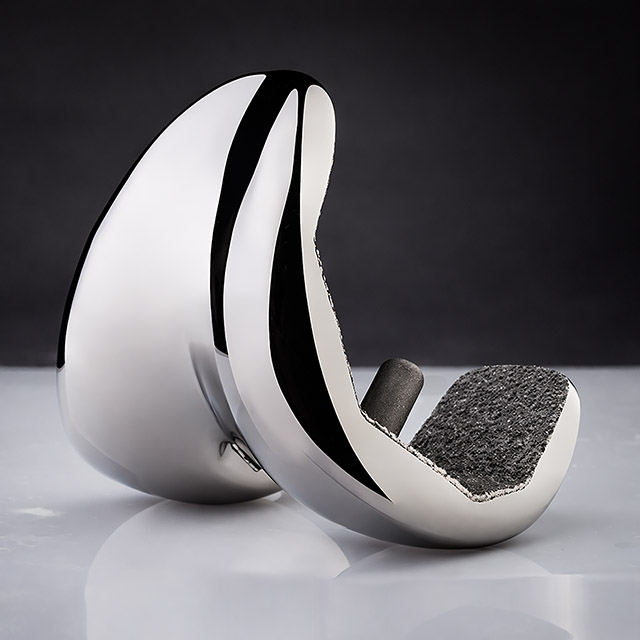
The Persona SoluTion PPS Femur from Zimmer Biomet is an alternative metal knee implant for patients who are sensitive to certain metals or bone cement.
Promoting Improved Durability
From a wear perspective, long-term performance data has been a key factor in the adoption of advanced materials. DeFrain pointed to data showing that BioDur 108 can achieve significantly higher strength than conventional 316L stainless steel and even cobalt chrome alloys.
“You can think of BioDur 108 as 316L’s big brother,” DeFrain said. “It’s stronger, cleaner and engineered for the regulatory landscape of restricted materials.”
In testing designed to simulate demanding joint conditions, BioDur 108 demonstrated wear performance and surface roughness comparable to cobalt chrome molybdenum, suggesting it could serve as an alternative material for articulating components in hip and knee implants.
Carpenter Technology has focused heavily on fatigue and wear performance at the metallurgical level, particularly for load-bearing and articulating components. DeFrain emphasized that material cleanliness is foundational to implant reliability, noting that tighter chemical control supports fatigue resistance and long-term implant performance.
At Carpenter Technology, melt processing serves as the foundation of what device engineers have to work with in their final implant designs. The company controls every step of the process, enabling precise chemistry and consistent microstructure across batches.
Cleaner melts translate directly into better outcomes. Fewer inclusions mean improved fatigue resistance and longer implant life, important factors in devices that are expected to perform reliably under constant mechanical stress.
“That’s critical for patient safety and device reliability,” DeFrain said. “It’s not enough to focus only on finished manufacturing. Orthopedic companies need to understand where the material’s chemistry is born.”
That focus on foundational quality carries through to every aspect of material performance. Cleanliness is paramount. Vacuum melting and re-melting options help minimize metallic inclusions, which can cause downstream failures.
Enhanced cleanliness also improves fatigue performance, an essential requirement for implants subjected to cyclic loading such as spinal rods and fixation screws. At the same time, tight microstructural control delivers predictable mechanical properties and greater confidence in long-term implant reliability.
Strain hardening by cold working can strengthen the metals used in orthopedic implants. “For hip and knee implants, the level of wear resistance required is achievable through strain hardening, without any added surface layer,” DeFrain said. “In fact, recent testing shows that cold-worked material can meet, and in some cases exceed, the performance benchmarks of conventional alloys.”
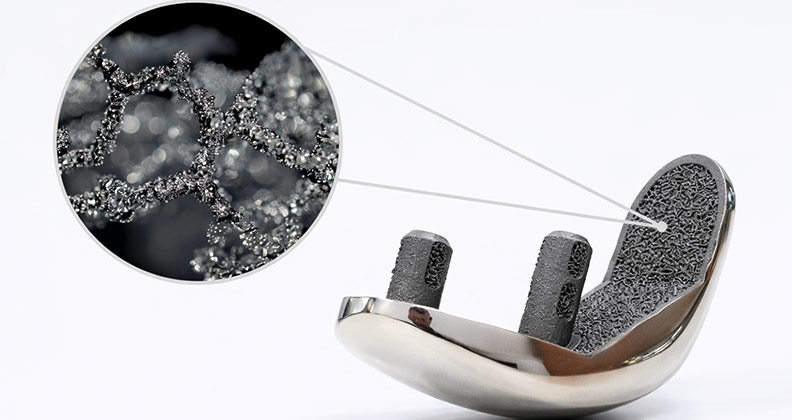
Beyond bulk material composition, surface technologies have become increasingly important for supporting cementless fixation and long-term implant stability. Titanium-based implants are frequently paired with porous structures designed to encourage bone ingrowth. These designs aim to deliver early stability while supporting long-term biologic integration.
Zimmer Biomet’s Persona SoluTion PPS Femur uses a porous plasma spray coating to support osseointegration in cementless applications.
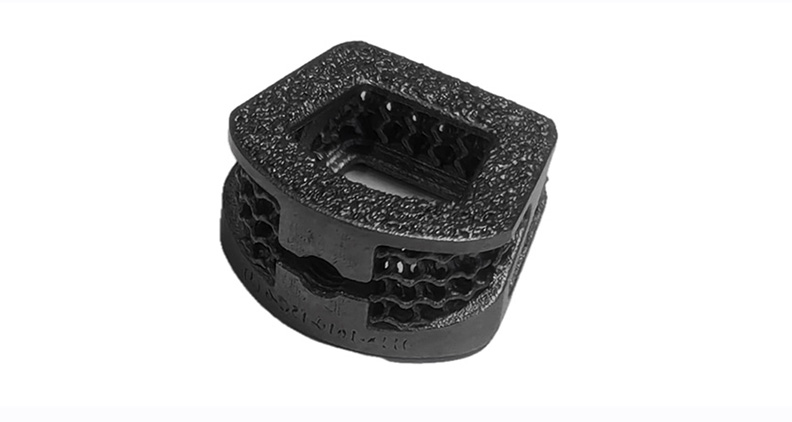
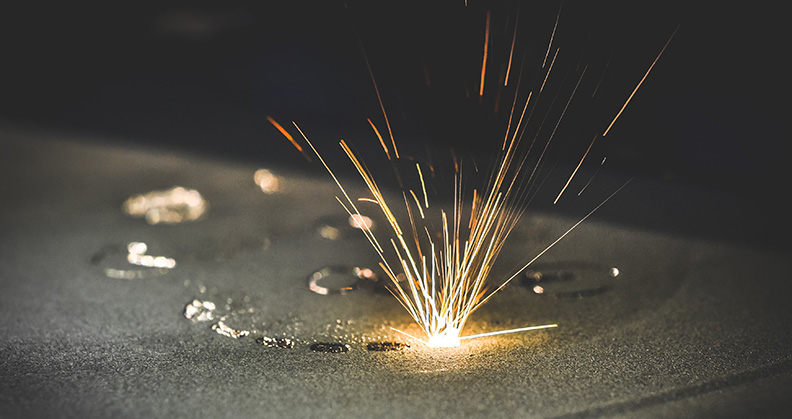
Smith+Nephew has focused heavily on additive manufacturing to engineer porous surfaces optimized for bone ingrowth. Its CONCELOC Advanced Porous Titanium technology uses a fully randomized porous structure that enables complex geometries that aren’t possible to create with subtractive manufacturing.
“CONCELOC is a structure that’s optimized for bone ingrowth and fixation,” said Mayank Shandil, Global Senior Vice President of Recon and Robotics Marketing at Smith+Nephew. “Its design enables rapid iteration during concept development and allows for the use of complex geometries, such as bone mimicking porosity and shape optimization.”
The technology is used across multiple applications, including acetabular revision systems and cementless knee implants.
“Large bone defects can be addressed using REDAPT acetabular cups with CONCELOC advanced porous technology to promote bone ingrowth,” Shandil said. “Additive manufacturing also enables features like variable-angle locking screws for improved fixation.”
BioDur 108 achieves high strength, fatigue resistance and wear performance while allowing for additional surface modification when extreme hardness is required. Rather than relying on traditional coatings, the diffusion processes introduce hardening elements directly into the surface. According to DeFrain, this approach enhances wear characteristics beyond what simple strain hardening alone can deliver.
Standing Out from the Crowd
While engineering performance is essential, surgeon feedback continues to play a decisive factor in whether advanced materials gain traction in the operating room. Ease of adoption and consistent performance across cases remain central to material acceptance among surgeons.
Urban said Zimmer Biomet worked with surgeons to gather feedback while developing the Persona SoluTion PPS Femur, many of whom stressed the importance of being able to adopt new materials without major disruptions to their surgical workflows and shared the importance of compatibility with existing materials that are used for revision cases.
Smith+Nephew reports a similar observation in implant performance expectations.
“Surgeon and patient needs and wants have evolved significantly,” Bourne said. “Initially, the primary goal of joint replacement surgery was pain relief, while implant longevity remained uncertain. Advances in materials, design and surgical techniques have improved device durability, shifting the focus to patient satisfaction and functional recovery.”
As implant platforms converge in overall design, materials science has emerged as a key area of differentiation. In an increasingly competitive industry, materials are one of the clearest levers orthopedic companies can pull to gain an advantage in the marketplace.