

 Copy to clipboard
Orthopedic innovation is accelerating at breakneck speed, driven by advances in artificial intelligence (AI), additive manufacturing and increasingly sophisticated implant designs. As product development tools become more powerful, the demands placed on engineering teams are rising just as fast.
Today’s product developers are expected to move quickly while navigating complex regulatory pathways, validating new technologies and ensuring every device performs safely and meets expectations in the real world.
What’s becoming clear is that the next generation of orthopedic engineers must blend technical fluency with sound judgment, regulatory insight and hands-on manufacturing know-how. They need to be as comfortable interpreting AI-driven outputs as they are evaluating physical prototypes and understanding clinical impact of the devices they design. And, as fast as things are moving in today’s tech-driven world, they need to be comfortable with uncertainty and continuous learning.
Engineering with AI
While AI is beneficial in many ways, it cannot replace human decision-making. Future-ready engineers should be able to evaluate, interpret and challenge AI-generated outputs.
“AI is rapidly improving the ways we process and present technical data, but it’s not a substitute for engineering judgment,” said Jennifer Moore, Principal at Human Aided Design and long-time orthopedic engineer. “It can help draft reports or summarize test outcomes, but engineers must still know how to analyze that data, identify what matters and decide next steps.
“Engineers can’t rely on AI to understand the nuances of new products or clinical use cases. The real skill lies in discernment — knowing what’s right, what’s missing and what could go wrong.”
That required level of judgment fundamentally shifts an engineer’s job description from purely executional to one that includes strategic oversight, making critical thinking a core necessity for the role. In fact, Moore places the ability to act independently among the most essential skills needed for the next generation of engineers.
“I see many early-career engineers hoping for step-by-step procedures to follow, but product development rarely works that way,” she said. “The most impactful engineers are the ones who can navigate ambiguity, identify what’s truly needed and drive toward practical solutions without needing every step laid out for them. That’s the kind of thinking that delivers real results.”
Sai Ranjith Ramakrishnan Kumar, Digital Device Quality Engineering Lead for Sanofi, has witnessed this evolution of skill requirements firsthand as Quality Lead for AI-integrated medical device development, including pioneering Software as Medical Device (SaMD) programs.
“Engineers now need a hybrid skill set that bridges traditional mechanical design expertise with data literacy and algorithm validation capabilities,” he said. “They need strong systems thinking to evaluate AI-generated design recommendations against clinical requirements, manufacturing constraints and biomechanical principles, essentially becoming curators of intelligent systems rather than just designers.”
Regulatory Literacy
Understanding how to bring a device to market is as critical as designing it. With AI still in its relative infancy in orthopedics, regulations are evolving and varying based on which geographic region the device is being deployed. This creates a complex issue for engineers who have a responsibility to design safe and compliant products.
“The critical shift isn’t just about understanding AI technology; it’s about developing regulatory intelligence specific to AI and machine learning medical devices,” Kumar said. “[In the U.S.] Engineers must navigate evolving FDA guidance on software validation, understand bias mitigation in training datasets and implement continuous learning protocols within quality management systems.”
Kumar believes that regulatory literacy is the biggest skill gap in today’s orthopedic device engineering workforce — not just knowing standards exist, but understanding how to operationalize them throughout the product development lifecycle. According to him, many engineers excel at technical design but fall short when it comes to translating regulatory requirements into actionable quality controls and risk mitigation strategies.
“Future-proofing requires empowering engineers with regulatory literacy that transcends specific technologies,” he said. “Engineers who master ISO 13485, ISO 14971 and Design Control principles can validate additive manufacturing, novel materials and AI tools.”
Academia, in part, is introducing up-and-coming engineers to the importance of regulatory compliance as part of medical design in more advanced degrees. This concept was reflected in the experience of Thomas McNamara, Team Lead and Biomedical Engineer at FDA.
McNamara earned his bachelor’s and master’s degrees and is working towards his doctorate — all at Purdue University — while working full-time in the orthopedic industry during his postgraduate studies.
As he began working in industry, he was able to compare what he was learning in the classroom with the standout challenges he faced in the real world: regulatory compliance.
“It’s not just about having a great product or a great idea,” McNamara said. “You need to navigate regulatory requirements before you can bring a product to market and help patients. That was a steep learning curve for me, and it’s something from an educational standpoint that would benefit a lot of engineers moving forward.”

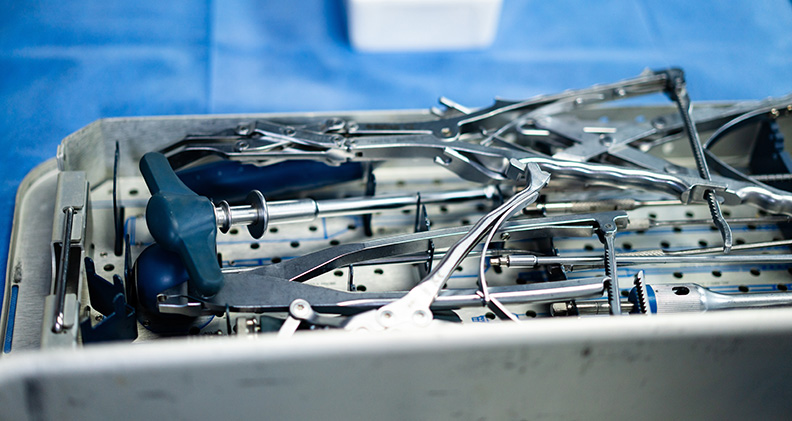
Today’s engineers are sometimes lost in the data without a clear understanding of subtractive manufacturing methods.
Many Languages
Tomorrow’s orthopedic engineers must be able to fluently navigate a variety of disciplines, including mechanical design, manufacturing, AI, digital simulation and clinical contexts. That’s a lot more than the engineers of the past had to manage.
The tacit skills required to perform everyday duties efficiently and effectively will look much different in five years than they do today, with engineers able to seamlessly weave multiple disciplines together as they make judgment calls in their design process.
But today, it’s still a learning curve, and it takes work — and engineers who are willing to put the effort and critical thinking into this new way of designing orthopedic devices.
“The bar is high, and the pressure is real,” Moore said. “With the growing complexity of systems, we need to normalize learning, collaboration and asking better questions. It’s not about knowing everything; it’s about knowing how to figure things out.”
The complexity of systems speaks to the need for engineers to be able to collaborate across software, mechanical and biological disciplines. Kumar explained that modern medical devices aren’t standalone hardware; they’re part of digital ecosystems, requiring engineers who can bridge traditional engineering with software standards, electrical safety and risk management.
“Engineers trained in component-level excellence often lack the holistic perspective needed to navigate the interconnected requirements of modern quality management systems and Design Control requirements,” he said.
This goes hand-in-hand with the need for critical thinking skills and self-starters. The ability to recognize and understand the importance of each relevant discipline and how it impacts the overall design of a device will be vital as systems become more complex.
Traditional Knowledge
While AI and additive manufacturing are creating buzz in orthopedics, that doesn’t mean foundational manufacturing and tactile skills should decline among the next generation of engineers. But that’s what can happen as the talent pipeline chases the latest innovations without proper training on traditional methods.
“Additive manufacturing is in the spotlight now, which is great, but it’s causing a gap in subtractive manufacturing literacy,” Moore said. “Too few engineers truly understand machining, tooling or design for manufacturing principles for legacy processes.”
Kumar agrees with the need for young engineers to develop these skills.
“Design for manufacturing skills are critical, especially as additive manufacturing and patient-specific devices become mainstream,” he said. “Engineers must understand how design decisions cascade through validation, sterilization and packaging requirements.”
Beyond understanding the more traditional manufacturing processes, hands-on experience is also an important skill for orthopedic engineers. As digital design programs have become more sophisticated, engineers have begun to work solely on computers.
“There’s a significant skills gap,” Moore said. “I’ve mentored new grads who had never picked up a power drill. We need to rebuild that tactile confidence — the ability to work with physical parts, tools and fixtures, and not just digital models.”
But Moore doesn’t think this will be the case for long. She predicts a pendulum swing over the next decade, with additive manufacturing continuing to grow along with renewed appreciation for subtractive manufacturing expertise.
“Additive isn’t a magic bullet,” Moore said. “We still need world-class machinists, prototype shops and engineers who understand traditional manufacturing constraints.”
Engineers of the future must understand how various manufacturing methods work and how design impacts every step of the process, regardless of the method used.
“As digital tools become more powerful, the differentiator won’t be who can click the fastest. It will be who understands what should be built, and how it will behave once it leaves the screen,” Moore said. “Mastering both digital workflows and physical behavior will be the defining skillset of the next decade.”
Recruiting Talent
To attract and retain top engineers, orthopedic companies must offer purpose-driven work, authentic leadership and investment in growth.
“Engineers don’t just want competitive salaries — they want meaningful work, supportive leadership and room to grow,” Moore said. “Companies that financially incentivize loyalty and promote engineering leaders who come up through the ranks will win the long game. There’s a big difference between being managed by someone who understands your daily reality and someone who’s never launched a product.”
Technical expertise in general will continue to be in high demand as the world digitizes in every vertical at an ever-increasing pace. Orthopedic organizations looking for engineering talent are competing with multitudes of manufacturing, consumer, tech and many other industries for professionals who can navigate digital design spaces.
Part of what sells the job in orthopedics is the meaning behind the work.
“What’s really important — and what drives a lot of people to orthopedics — is the ability to help people and actually see the direct patient benefit,” McNamara said. “When I was in the industry, hearing about the patient experience and how devices led to improving their quality of life was really impactful.”
Kumar sees mission-driven work with tangible impact as one of the major competitive advantages for orthopedic companies aiming to attract top engineers. Offering technical complexity that rivals consumer tech companies is another advantage.
“Orthopedic engineering presents challenges spanning medical design, software validation, risk management and navigating evolving regulatory frameworks,” he said. “This multidisciplinary complexity attracts engineers seeking intellectual challenge beyond pure software development.”
Emphasizing these aspects of working in orthopedics can help recruit engineers into the industry, but building your company into a future-proof engineering powerhouse requires an intentional approach.
Kumar noted the importance of encouraging and creating space for engineers to publish articles in trade publications, present at industry conferences and serve on committees sets companies apart.
“I’ve seen how companies that support thought leadership, certification pathways and external professional engagement differentiate themselves in competitive talent markets,” he said. “Engineers value employers who invest in their professional reputation and career trajectory.”
Of course, all employees want to know that their companies can have strategic foresight, particularly when technology is in acceleration stages.
“Be early adopters,” Moore said. “The companies that embrace new tech first don’t just get ahead; they help shape how the industry approaches it. Yes, there are challenges to being first. But you get to build the playbook, develop internal champions and influence vendor roadmaps. And you attract the kind of engineers who want to solve hard problems and lead from the front.”
For device companies, building and retaining this level of talent is becoming a strategic differentiator. The companies that invest in training, mentorship and purpose-driven cultures today will be the ones shaping the future of orthopedic design tomorrow.