

 Copy to clipboard
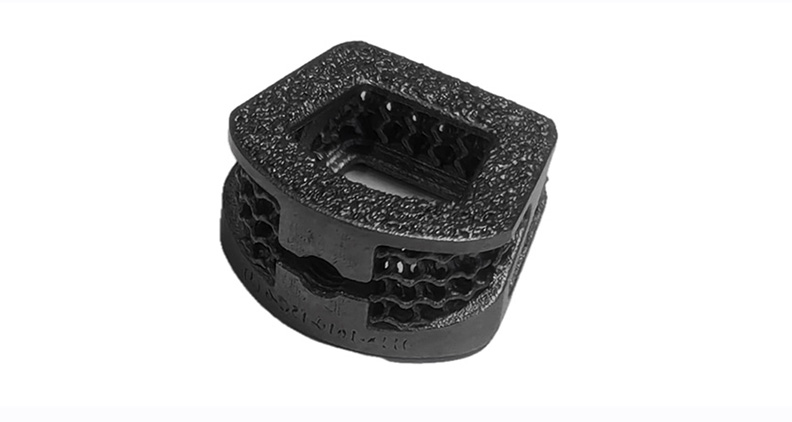
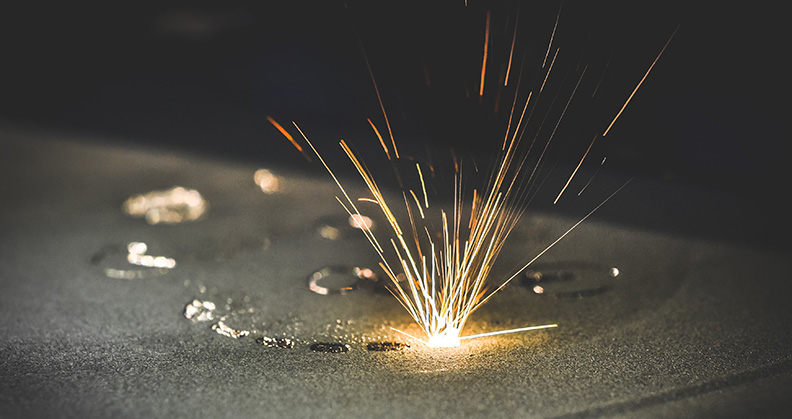
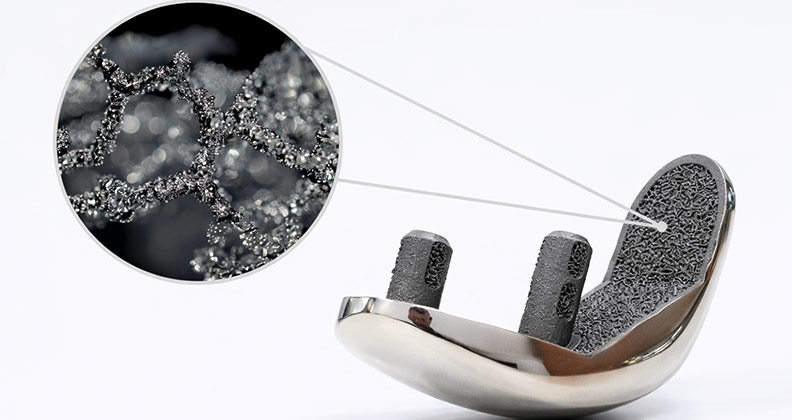
Additive manufacturing is becoming a strategic driver of innovation in orthopedic product development. Patient-specific implants, porous structures that promote osseointegration and the use of resorbable materials and bioprinted scaffolds are reshaping how devices are designed and made.
The details of those transformations are specific to individual companies and their design teams. And yet, common trends are emerging that will define where additive manufacturing is headed next. At last month’s OMTEC®, a panel of experts convened to discuss the ways that 3D printing is redefining competitive advantages for companies that invest in its undeniable potential:
- Trey Rodgers, Ph.D., Research Principal Engineer at Zimmer Biomet
- Alexander Henry, Business Development Manager – Medical at AddUp FIVES
- Theo Arhio, Chief Operating Officer at Brinter
- Jesse Unger, Senior Manager of Development at ATEC Spine
Untapped Opportunities
Unger believes translating clinical requirements into design requirements, like matching the stiffness of bone for proper integration, will drive improved additive applications. “Real-world uses can conflict with the design requirements of additively manufactured components,” he said. “I’m looking forward to seeing what companies can do to push the boundaries of what’s possible in designs of patient-matched implants.”
Henry believes the biggest opportunities involve 3D-printed devices designed for large joints and extremities because of the required range of motion and anatomical variation. “The OEMs that are pursuing those solutions are blazing the trail for what will eventually turn into a real-world production PSI pathway, and that’s going to blow the doors off of what we saw with spine. The scale is so much bigger, and that will be justification to leverage additive manufacturing and take it to a whole new level.”
Arhio, who leads the development of the first 3D-bioprinted biosynthetic implants, sees the biggest opportunity as a paradigm shift from permanent implants to regenerative ones.
“Being able to offer a [biodegradable] scaffold that helps the body generate tissue is the next frontier for us,” he said. “It’s been a slow development because the manufacturing, biocompatibility and regulatory requirements are totally different. We need to rethink the mental model of what an implant should be.”
Watch the Full Session
Balancing Design and Production
It’s no secret that additive manufacturing has allowed for new and innovative design possibilities, but getting intriguing ideas into production can prove challenging. The panelists believe engineers can’t get so caught up in pushing designs forward that they overlook the necessary steps to bring products to market.
According to Arhio, it can be all-too easy to “nerd out” during the design phase and lose focus on manufacturing requirements. “For bioprinting, 90% of the design involves figuring out whether you can actually produce the implant,” he said.
Henry said organizations that have a strong understanding of their additive manufacturing product development process and develop a document that maps out the measurable performance-driven milestones are primed for success.
“Doing that work on the front end reduces analysis paralysis and improves the chances of a successful product launch,” he said. “If you have a standardized process in place with definitive targets, it becomes easier to freeze the design when the product reaches those performance parameters and move toward FDA submission.”
Part of the production process, of course, involves deciding which elements of the additively manufactured implant to keep in-house and which to outsource. Developing the expertise that’s needed to run an effective additive manufacturing program can be difficult and expensive, so startups and mid-size companies often partner with contract manufacturers that specialize in 3D printing to reduce their capital exposure.
Henry said it’s not so much whether insourcing or outsourcing is right or wrong, but rather understanding the DNA of your organization, what assets you have and where you are in your development cycle as an organization.
“As revenues grow, you develop the internal resources to take advantage of a more insourced model,” he said. “That gives you control of your supply chain, the margins and the direction you want to take the portfolio.”
Arhio pointed out that Brinter is an unusual situation because they make their own 3D printers. “The printer itself is our IP, so we’re always making make-or-buy decisions,” he said. “As our production volumes rise, we have conversations about what business we want to capture. The one thing we want to avoid is being in an in-between state of not verticalizing and not outsourcing efficiently.”
In the end, the decision on whether to bring additive manufacturing in-house has no easy answer. “You need to understand the consequences of what you’re releasing to other companies and really understand the value that the product, launch and timeline is giving you,” Dr. Rodgers said.
The Push for Personalization
The goal of producing personalized implants at scale remains elusive. Hurdles remain, particularly on the regulatory front.
“Regulatory frameworks are designed for mass-produced devices, but when every aspect of a personalized implant can vary, what is your predicate?” Unger said. “I think FDA is doing a good job of pushing the regulatory path forward, and hope that we’ll get more leeway there in the future.”
Henry is optimistic that personalization will become more possible with new additive platform options.
“Legacy platforms were perfect for spine designs based on the size of the implants, but there really hasn’t been one that could deliver a strong business case for patient-specific large joint and extremity devices until recently,” he said. “Now that platforms are being developed to deliver the type of throughput needed for large joints and extremities, you’ll see a whole new level of what’s possible.”
Many people in orthopedics don’t fully appreciate how hard it is to change manufacturing workflows and maintain a full digital thread within a regulated industry, according to Dr. Rodgers. “It’s not like you can suddenly switch to making personalized implants for every patient. It ultimately comes down to value. If you can demonstrate value, and payors want to pay for that value, you’ll drive significant changes in how we deliver care.”
The Decade Ahead
Henry believes achieving a hybrid construct using 3D-printed metals blended with a bio-printed envelope will soon be possible: “I’m thinking about some kind of encapsulation process in the implant so that it will help promote fixation, reduce infection rates and promote soft tissue repair,” he said.
Unger believes that the medical device industry is inherently iterative. “Everyone likes using the word ‘innovation,’ but many companies in the space exist within the 510(k) pathway, which is based on predicates,” he said. “We do our best to innovate within that space, but the way I see things shaking out in additive is that patient-matched implants are going to get a foothold, especially in spine, as a subset of the business.”
Meanwhile, automation will continue to gather momentum in additive manufacturing.
“We’re going to leverage automation to assess patient scans and determine what implants to use and how to place them,” Unger said. “That means one side of the business will continue to focus on off-the-shelf implants when they can achieve appropriate patient outcomes and another side will focus on developing patient-matched options.”
Arhio believes that bioprinted tissues will be the norm in 10 years, including for use during rotator cuff and other tendon repairs. “The cost efficiency will entice payors to reimburse for their use, and that will increase surgeon adoption. That’s when the market shift will occur,” he said. “I also think the development line between contract manufacturers and OEMs will evaporate, because it won’t make sense for OEMs to develop their own bioprinted technologies from scratch.”
Dr. Rodgers is hopeful that additive manufacturing will help the industry solve the two major implant-related failures of joint replacement surgery: postoperative infection and loosening due to poor fixation.
“Wouldn’t it be nice to look back and think about what it was like when we were trying to figure out biological fixation, modulus matching and issues with infection?” he said. “Regardless of the material used, it’d be great to no longer create implant designs for revisability. That’s what I want to see in 10 years.”