

 Copy to clipboard
Implantable medical devices have revolutionized modern healthcare by restoring mobility and improving patients’ quality of life. Orthopedic and spinal implants operate under demanding physiological conditions. Polymer bearing material and metallic biomaterials such as titanium alloys and cobalt-chromium alloys have been the backbone of joint implants. Ceramic materials, including alumina and zirconia, offer better wear and corrosion resistance. Surface modification includes anti-bacterial and drug-eluting coatings for controlling post-operative infection, bioactive coatings for promoting osseointegration and hard, corrosion-resistant and low- friction coatings for reduced wear and longer life.
The long-term success of these implants depends heavily on the biomaterials from which they are manufactured and how these materials interact with the biological environment. Repeated loading, joint motion, corrosion and biological interactions can degrade implant materials over time. Excessive wear can generate debris particles that contribute to osteolysis and implant loosening. High local friction can change the biochemistry of the biofluids that can compromise lubricity. Mechanical damage and fretting at modular junctions can compromise protective surface films. Corrosion can release metallic ions into surrounding tissues to induce inflammatory responses, allergic reactions and cytotoxicity. Though several test methods exist, continuous clinical studies and insights from retrieved implants demand the development of new test methods for comprehensive evaluation of long-term performance.
Importance of Wear and Corrosion Testing
Wear, friction and corrosion testing help to screen novel materials, evaluate candidate materials, compare coatings and assess manufacturing and design changes. Laboratory testing on bio-tribometers therefore plays a critical role in reducing clinical risk. It is important that in-vitro test methods are clinically relevant by reproducing the physiological in-vivo conditions in the human body and the relevant wear and degradation mechanisms.
Biomechanical simulations connect wear and friction data from coupons with actual joint designs. Such tools require simplified and versatile bio-simulators that reproduce relevant force/motion profiles and measure resultant friction torque response. These tools help materials and design engineers understand and optimize patients-specific implant geometry, material selection and manufacturing processes with optimized designs that can improve load distribution, stress reduction and mechanical compatibility with bone and overall implant lifespan.
Paltro, a deep technology company working on robotic test platforms, intelligent sensing and software architecture, machine learning based data insights and work flow automation, offers unique and relevant test platforms such as: an advanced, 6-station BioTribometer (B2V2) for wear and friction; the UT-150 Mini Test Lab for tribo-corrosion testing, fretting, scratch evaluation of coatings and surface imaging integrated on a modular platform; and a BioSimulator (BioSim) for joint testing and design optimization.
Emerging Test Methods and Experimental Techniques
Pin-on-disk testing evaluates friction and wear due to relative motion between a material pair, typically a flat-ended pin on a flat disc as per ASTM F732. Typical test durations extend to millions of cycles. Multidirectional motion profiles with different cross-shear intensities disrupt the “strain hardening” associated with unidirectional sliding of UHMWPE that might present false high wear resistance values. Few of the industry-accepted profiles include figure of 8, square, circular and U-profile (Figure 1) with the U-profile associated with delamination wear as per the ISO 20014 method. Test methods and platforms complying with the standards should be able to provide wear rates of ~ 10 mm3 per million cycles and linear wear rates of 0.07 to 0.2 mm/year for the polymer on metal pair associated with adhesive and abrasive wear.
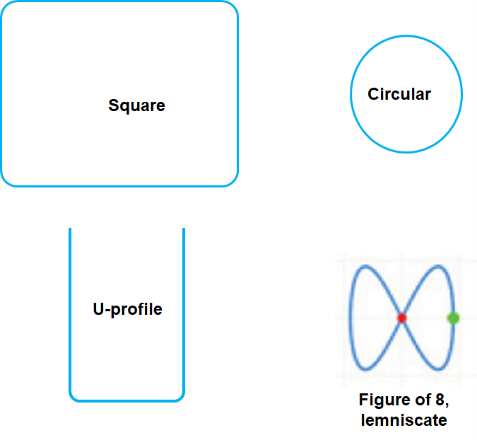
Figure 1. Multidirectional motion profiles with different cross-shear intensities relevant for wear testing of implant materials. Such profiles and others can be executed on B2V2 biotribometer
Interrupted testing at different cycles for gravimetric measurements and sample surface analysis is routine in long duration testing. Test platforms with features that allow accurate sample repositioning and orientation for overlap of the motion path are important for continuity of wear history and rates as well as improved precision. In addition, flat-on-flat samples require techniques that allow uniform contact pressure to avoid edge loading and false wear behavior.
Case Studies
- Crosslinked vs. Uncrosslinked UHMWPE
Crosslinked and uncrosslinked UHMWPE were tested simultaneously (three tests per material) against CoCrMo discs on B2V2 six station biotribometer with a constant load of 225N, figure of 8 motion profile, 1 Hz and 37 deg C in simulated body fluid. Wear of crosslinked UHMWPE was lower by an order of magnitude compared to uncrosslinked UHMWPE (Figure 2). The surface topography of the pin showed removal of machining marks and formation of grooves and polished areas, and the metal disc showed multidirectional scratches consistent with observations from retrieved implants.
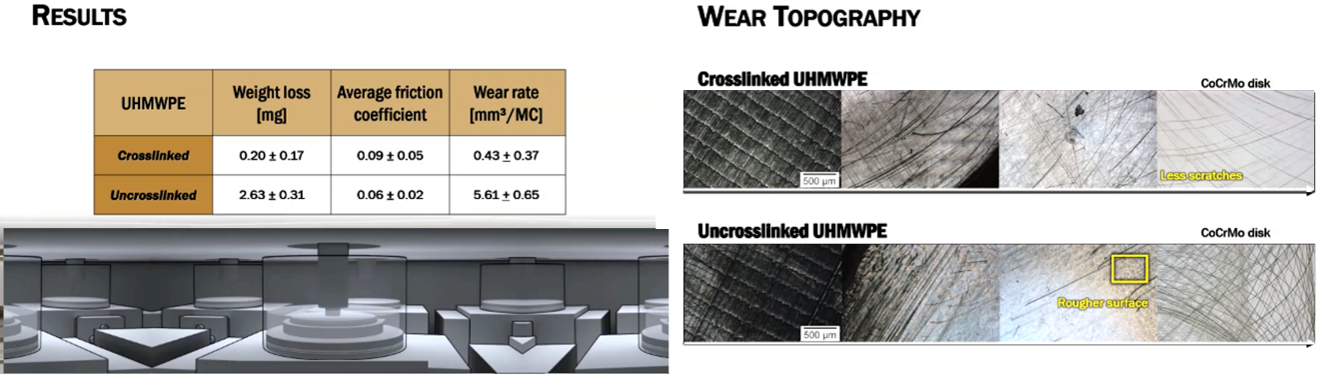
Figure 2. Crosslinked and un-crosslinked UHMWPE wear rates and topography
- Wear of Antibacterial Coatings
An as-coated CoCrMo disc (coating A) and multilayer coated CoCrMo disc (coating B) were tested against UHMWPE with a constant load of 225N, figure of 8 motion profile, 1 Hz and 37 deg C in simulated body fluid. Coating B showed reduced wear of UHMWPE compared to coating A. On the other hand, coating A reduced the release of Cr ions into the serum (Figure 3).
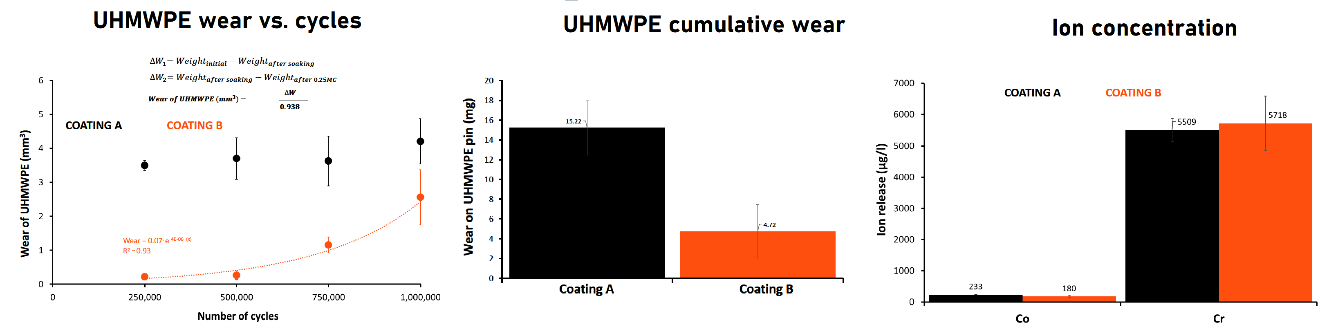
Figure 3. Antibacterial coatings wear and metal ion release comparison
III. Physiological Load Profiles (Fixed vs. Dynamic load)
Implementing physiological load with pin-on-disc wear testing provides a better representation of interface wear mechanisms compared to static loading. Representative gait load as per ISO 14242 implemented on the B2V2 biotribometer is shown (Figure 4).
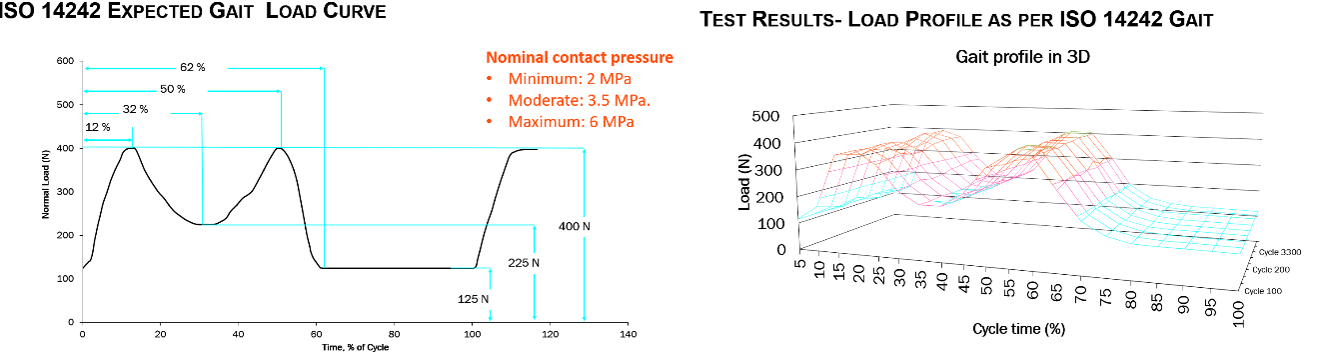
Figure 4. Gait load profile on the B2V2 biotribometer
Results for UHMWPE against CoCrMo at fixed load of 225 N and physiological varying load between 125 to 400N shows differences between the wear rates and wear features on the pin (Figure 5). Multiple cracks existed for both fixed and dynamic load profiles. Deeper grooves were seen for fixed load, corresponding to a higher volume loss compared to dynamic load. Interestingly, fatigue wear features such as ripples were seen more prominently under dynamic loading.
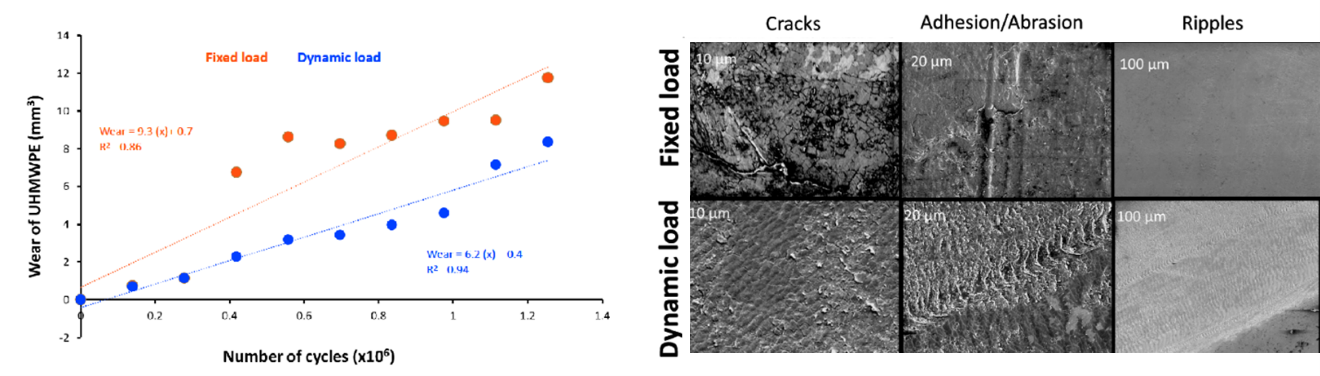
Figure 5. Static vs. dynamic loading results on wear rates and wear topography
Delamination Wear Test Method
Highly loaded joints such as the knee and shoulder undergo delamination wear due to subsurface defects and material removal. Reproducing these forces requires more aggressive conditions than those mentioned in the ATSM F732 testing method. A compact U-shape motion profile (Figure 1) with reversal of direction has been shown to accelerate delamination of highly wear-resistant polymers such as HXLPE and VEPE, and is a test method included in the upcoming ISO 20014 standard.
Three Body Wear Test Method
Newer methods have been developed (ASTM F3738) to evaluate the wear performance of metal-on-polyethylene hip joint prostheses under adverse conditions using third-body particles to simulate scratches and pits observed on CoCrMo femoral heads and polyethylene liners. The standard outlines a preconditioning method in which the bimodal distribution of alumina particles are embedded into the polyethylene liners immediately before initiating the wear test (Figure 6). Such robust testing methods help manufacturers compare implant materials and designs, evaluate wear resistance and better predict long-term clinical performance under challenging real-world conditions. Test platforms such as B2V2 biotribometer offering the flexibility to accommodate three body testing and techniques that consistently pre-condition samples will result in improved precision and reduced variability.
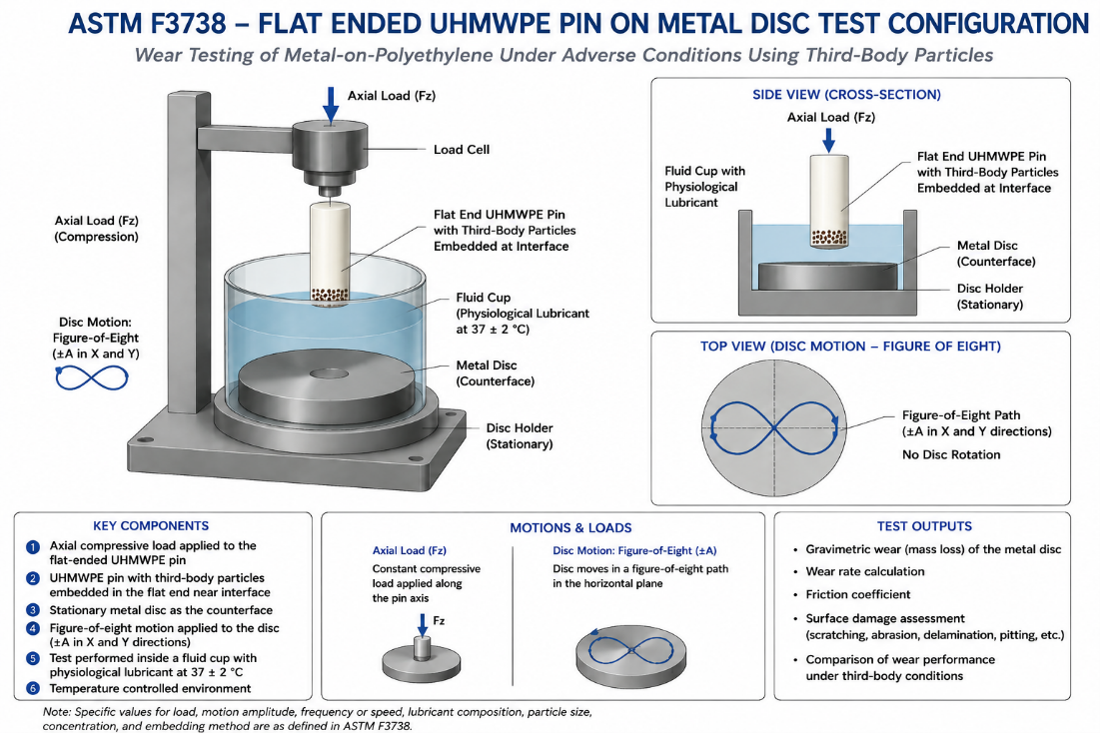
Figure 6. ASTM F3738 three body abrasive wear testing graphical overview
Fretting Corrosion Test Method
Implants operate in a corrosive physiological environment. Electrochemical testing evaluates passive film stability, ion release and corrosion susceptibility. Tribocorrosion testing combines wear and corrosion to better replicate real-world conditions. In many cases, the total wear is significantly greater than the sum of both degradation mechanisms (Figure 7). Fretting corrosion occurs when two contacting surfaces experience very small amplitude oscillatory motion (10 to 100 microns), such as of modular head-neck tapers and modular knee components. To quantify tribocorrosion, a tribometer is integrated with an electrochemical workstation and three-electrode corrosion. During wear testing, friction is recorded and the increase in corrosion current is simultaneously measured to accurately determine the material removal rates (Figure 7).
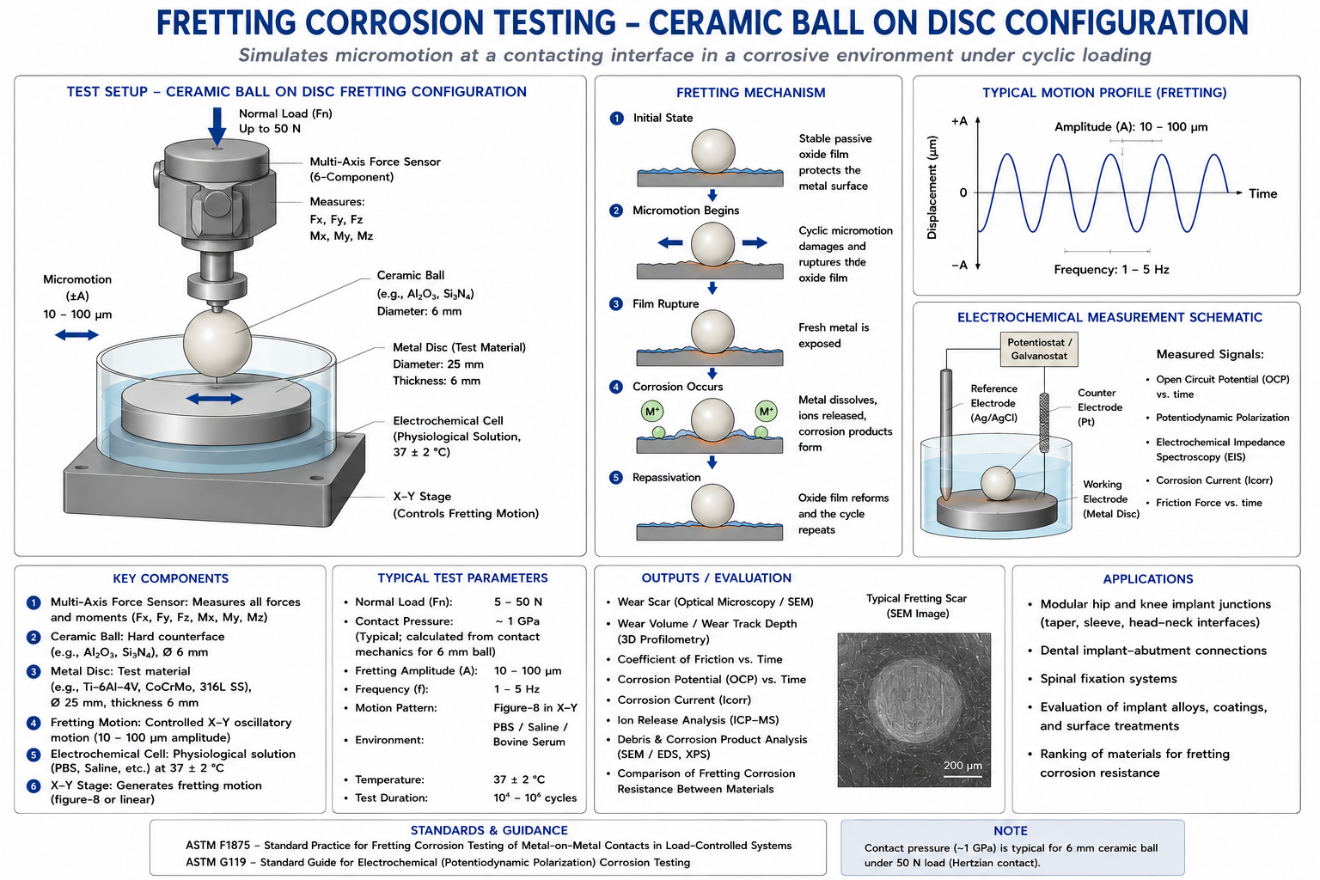
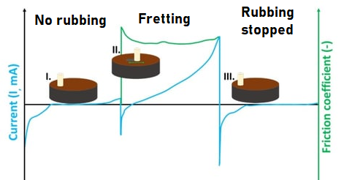
Figure 7. Graphical summary of fretting corrosion testing and representative wear, friction and corrosion data
Summary
Improved wear resistance and durability of materials exposed to physiological conditions and corrosive environments remain key determinants of implant success. Paltro’s 6-station Biotribometer B2V2, Mini Test Lab and Biosimulator offer advanced capabilities and intelligent control architecture to execute programmable force and motion profiles that are relevant for more aggressive conditions of 3-body abrasive wear and delamination. Smart sensing of friction, temperature and corrosion offer realtime data and insights into material degradation that can accelerate the development and qualification of safer and longer-lasting implant solutions.