

 Copy to clipboard
Worldwide sales in the highly competitive spine market surpassed $10.7 billion last year, with the top players developing robotic platforms and expanding digital ecosystems to jockey for position as the segment’s top earner.
Enabling tech advancements might be garnering much of the attention throughout the industry, but Laszlo Garamszegi, Chief Technology Officer at Aurora Spine, expects steady growth in the spine fusion market driven by degenerative disc pathology in an aging patient population. He believes companies will continue to focus on developing minimally invasive surgical techniques and advancing outpatient procedures.
According to Garamszegi, personalized implant designs and 3D-printed architectures that manage modulus and promote osseointegration will continue to evolve and gain market share. “Systems that expand clinical indications, including for patients with low bone mineral density, and reduce operative time are positioned to benefit in the market’s current environment,” he said.
Parker Snedden, Vice President of Marketing at Spinal Simplicity, sees similar themes in the push to improve spine fusion outcomes.
“Increased precision and minimally invasive surgical techniques are two trends that come to mind,” he said. “Physicians are always looking for better outcomes for their patients and achieving robust fusion while minimizing surgery time and the invasiveness of procedures — while preserving the patient’s native tissue — will continue to be a major focus.”
Finding the Perfect Fit
In September, Aurora Spine launched the DEXA-L Anterior Lumbar Interbody Fusion Device, a standalone device that’s reportedly the first bone-mimicking structural implant that’s designed to match a patient’s bone density and quality.
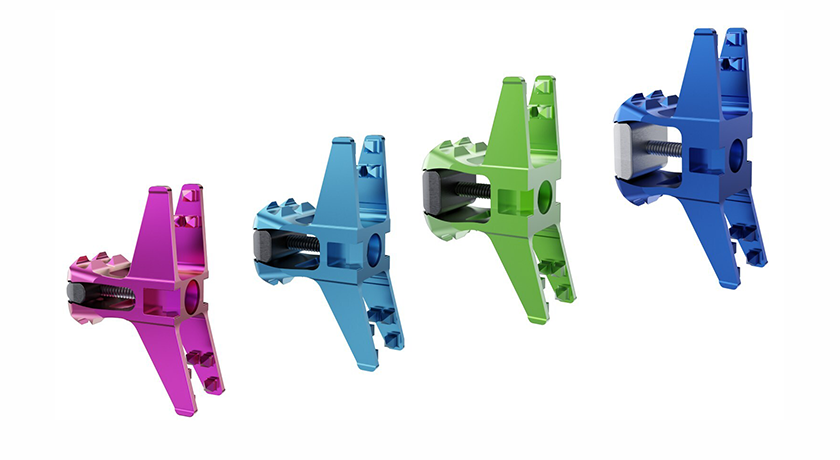
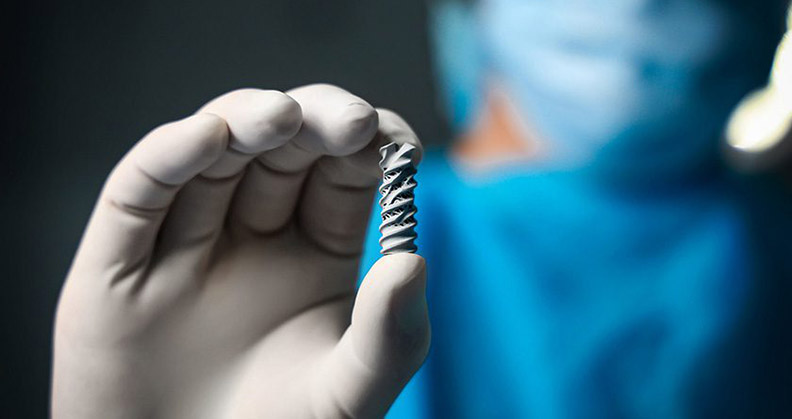
DEXA-L is additively manufactured from medical-grade Ti-6Al-4V with Aurora Spine’s patented DEXA lattice. The internal network of struts and pores is engineered to emulate cancellous bone and is produced in multiple density options (low, medium and high) so the construct’s effective stiffness can be matched to a patient’s bone quality.
“The open, interconnected porosity promotes bone ingrowth and perfusion while distributing load more physiologically,” Garamszegi said. “By tuning implant stiffness toward the host bone’s elastic modulus, the design aims to limit stress shielding and reduce subsidence risk, particularly in low-density bone.”
Importantly, DEXA-L features a zero-profile ALIF cage with four integrated vertebral screws and a positive locking cover plate that captures the screw heads to prevent back-out. The features provide immediate segmental stability and graft compression in a single implant.
“With four screws engaged, no separate anterior plate or ancillary hardware is required,” Garamszegi said.
DEXA-L’s porous titanium cage serves as the structural scaffold for graft containment and osseointegration. Fixation screws pass through the cage’s anterior face and function as lag screws to compress the graft column.
Because the cage and fixation are integrated, DEXA-L streamlines case workflows: Surgeons place the cage, drive the screws and engage the lock.
“Eliminating a separate plate can reduce retractor time and anterior profile near the great vessels, and it simplifies trays and instrumentation,” Garamszegi said. “In practice, surgeons may see shorter operative time, smaller exposure and fewer components on the back table while achieving stability comparable to a cage-plus-plate construct.”
Considering the move toward personalized medicine, DEXA-L addresses a wider spectrum of patients, especially those with low bone mass, who might otherwise have poor outcomes with conventional interbody devices.
Garamszegi said that DEXA-L is offered in color-coded, density-matched options that allow surgeons to select a cage stiffness that matches the patient’s bone quality, an important feature for the large number of osteopenic and osteoporotic patients who are at higher risk of subsidence with conventional and comparatively stiffer interbodies.
By modulating implant stiffness and maintaining a porous architecture for ingrowth, DEXA-L is designed to broaden patient eligibility and support fusion across a wide bone-density spectrum.
Precise Placement
Spinal Simplicity’s Patriot-SI Posterior Implant System stabilizes and fuses the SI joint after it’s maneuvered into place with a guidewire, allowing surgeons to pinpoint the appropriate intra-articular location under fluoroscopy. According to Snedden, guidewire placement is particularly useful in the SI joint, where implant malposition is known to occur and where anatomic variability exists to make each implantation unique.
In creating Patriot-SI, Spinal Simplicity’s engineers needed to figure out how to maximize fixation without increasing the implant’s size. Overcoming that challenge required a complete evaluation of SI joint biomechanics to determine ways to leverage core engineering principles.
Snedden said the team incorporated several features to improve bony fixation, including a hydroxyapatite (HA) coating, lattice structure and a tri-lead thread design. They also oriented the implant’s main axis so it was perpendicular to the axis of motion in the SI joint.
According to Snedden, the design improved biomechanical stability under flexion/extension with an implant length that is shorter than other commonly used SI devices.
Additive manufacturing and the HA coating were keys to SI-Patriot’s successful design and performance. “They were both used to facilitate fusion across the joint for long lasting stability,” Snedden said.
He explained that additive manufacturing enabled the production of an implant body that is rigid and strong while also having a large surface area and porous/hollow regions that can be packed with bone graft. Additionally, the HA coating facilitates osseointegration by stimulating new bone formation.
Biomechanical research has demonstrated that Patriot-SI can provide strong reductions of at least 25% of flexion/extension motion after initial fixation and maintain this level of stability when subjected to thousands of cycles of fatigue loading.
Snedden also noted that Patriot-SI outperformed a standard posterolateral implant in flexion/extension motion reduction after initial fixation and after fatigue loading.
“The improved stability could provide a more favorable environment for bony fusion, especially when paired with the direct decortication and graft delivery achieved with the device,” he said. “Our early clinical results have demonstrated strong pain and disability improvements and no adverse events, and we’re excited about our ongoing research evaluating fusion rates and longer-term outcomes.”
Patriot-SI is also designed to simplify procedures and provide an increased margin of safety compared to existing solutions.
“Being able to guide the implant precisely into place over the guidewire allows for a streamlined and repeatable approach,” Snedden said. “But we also wanted to design the system to avoid critical anatomic structures in the SI joint.”
The company’s engineers found that Patriot-SI can provide comparable or superior biomechanical performance than a standard posterolateral implant while being positioned three to four times farther from the anterior sacral cortex and the sacral foramen.
“We believe this increased safety margin improves patient safety and procedural efficiency, and we look forward to characterizing this further in our ongoing research,” Snedden said.