Copy to clipboard
The most successful fracture fixation systems traditionally focused on establishing mechanical strength and stability. While R&D engineers did what they could to mitigate damage to surrounding anatomy, significant soft-tissue disruption was the inescapable consequence of systems that effectively fixed bones.
That was then. Today, the very foundation of fracture fixation is in the midst of a philosophical shift. Mechanical strength and tissue preservation are no longer viewed as either/or propositions. Against this backdrop, orthopedic OEMs increasingly create systems that promise stable fixation without sacrificing soft tissue or biology.
Surgeons now expect fracture fixation systems to simplify complex procedures, reduce O.R. time and promote reproducibility. Companies that can deliver systems that improve bone stability, streamline surgical workflows and promote faster recovery are positioned to capitalize on this growing market.
Satisfying the Unmet Need
The ideal fracture fixation solution must address what is often seen as the greatest current engineering challenge: balancing designs that are too rigid and suppress healing with systems that don’t provide the necessary stability.
“The biggest unmet clinical need is achieving stable fixation without compromising biology or soft tissue,” said Sarah Sachinis, CEO and President of Meduloc. “Traditional plates, screws, rigid nails and K-wires often force a tradeoff between mechanical stability and biologic preservation.”
Meduloc believes it has found a solution to that tradeoff with its proprietary intramedullary fracture fixation system, which received FDA 510(k) clearance late last year for the treatment of small and long bone fractures. The system offers surgeons a new approach to fracture fixation by combining a strong, flexible nitinol implant with a deployable prong-locking mechanism.
It also provides rotational and length stability while giving surgeons the option of avoiding joint capsule entrance, a surgical technique that could enable earlier mobility, fewer complications, less surgical complexity and speedier patient recoveries.
“We’ve intentionally built the system around nitinol, which offers superelasticity and a modulus much closer to cortical bone than traditional materials like titanium or stainless steel,” Sachinis said. “It enables a fixation strategy that is both stable and biologically favorable, something conventional systems often struggle to achieve simultaneously.”
Advances in nitinol refinement — such as optimized thermal processing, laser cutting and improved shape-setting techniques — have allowed Meduloc to scale the material into larger, more structurally robust implants without sacrificing its superelastic performance. That hasn’t always been the case.
“Historically, nitinol was primarily used in smaller, lower-load applications because maintaining consistent shape-setting and mechanical properties at larger geometries was challenging,” Sachinis said.
Zooming out, an emphasis on new materials or surface treatments to improve implant performance or bolster bone integration is becoming an industrywide trend. Sachinis said she’s seen a growing focus on porous and bioactive implant coatings that promote osseointegration, surface texturing that enhances bone/implant interface stability and antimicrobial coatings to reduce infection risk.
Of course, material selection is only part of the equation. The effectiveness of a fracture fixation system is only as good as its design, and increasingly OEMs use large CT datasets and population modeling to create anatomically optimized, indication-specific plates buoyed by advances to both the plating and locking systems.
“OEMs are moving toward side- and fracture-specific plate families,” Sachinis said. “We’re also seeing variable angle-locking options designed to accommodate specific anatomy and fracture patterns.”
Low-profile plates improve patient comfort and reduce soft tissue complications, but reducing their thickness can compromise strength. It’s a design challenge that needs to be addressed. Optimized geometry that provides ribbing or selective thickening in high-stress zones helps, as do advanced alloys such as biodegradable magnesium, high-strength beta-titanium and the shape-memory nitinol that Meduloc employs.
There are also locking screw constructs in systems that distribute the load more effectively and act as internal fixators, which provide superior stability by locking the screw head directly to the plate. In addition to optimized load distribution, this design reduces stress at the screw/bone interface, which is especially helpful for surgeons working with osteoporotic or comminuted fractures.
As exciting as these advances in low-profile plates are, Sachinis urges companies to adjust their expectations and keep in mind one key truth about fixation systems. “The fundamental limitation remains,” she said. “Plates sit on the bone, so strength often comes at the cost of bulk.”
Quest for Simplicity
In a subsegment filled with multiple clinical challenges, Robert Medoff, M.D., Chief Medical Advisor at TriMed, singles out one pain point.
“Fracture complexity remains a significant challenge,” he said. “Breaks with multiple fragments, particularly in close proximity to a joint surface, remain difficult to reconstruct, and systems designed to address some of the unique biomechanical challenges of these injuries are an area of interest.”
And because the experience and abilities of surgeons vary, Dr. Medoff said, the systems that offer reproducibility and simplicity are the ones that continue to improve outcomes.
TriMed aims to address these challenges with its Wrist Fixation System 3, which is designed to treat distal radius fractures. It’s the latest in TriMed’s platform assembly that’s built for complex upper extremity fractures.
The newer system features a more user-friendly tray design and includes volar plating, fragment-specific implants, a bridge plate and a company-coined tool called the “Magic Screwdriver,” which allows surgeons to bring the radius out to length and correct coronal malalignment of the distal radius.
For TriMed and other players in the fracture fixation segment, flexibility is the name of the game. OEMs are responding to the inherent challenges of complex cases with innovations in the plate design of their systems — an improvement from fixed-angle holes that provide one-direction fixation for screws and pegs, potentially limiting the ability of surgeons to secure a specific fracture fragment.
“Polyaxial locking pegs and screws have surgical advantages that allow a fracture plate to secure fixation and provide angular stability over a range of trajectories,” Dr. Medoff said, adding that there are only two main ways to provide this type of flexibility.
The most common method, according to Dr. Medoff, is a range of locking angles, designed to offer surgeons variable levels of hardness between the fixation element and the plate, as well as the ability to mismatch the thread engagement in the hole relative to the thread on the screw or peg. The approach results in the screw or peg cross-threading into the plate surface as it is engaged.
While this may be the most common approach, it’s not necessarily the most effective.
“Although it’s simpler from a manufacturing standpoint, the torsional resistance tends to drop with higher degrees of angulation, and the insertion angles aren’t continuous but tend to assume fixed locations,” Dr. Medoff said, adding that the strength of this design drops if the fixation element is removed and reinserted multiple times.
TriMed, on the other hand, approaches flexibility in a different way: through a mobile bearing that is placed into a spherical opening with the plate. The bearing includes features that allow it to expand as the head of the screw engages the opening, in a manner that provides surface and compression over the thickness of the hole.
That expansion is strategic and intentional. “It provides a force couple to counteract torsional loads and has the advantage of allowing a smooth, continual range of angles with consistent torsional stability across the range of angles,” Dr. Medoff said. “This design also allows surgeons to lock repetitively. If the first position isn’t acceptable, the fixation element can be removed and redirected while surgeons remain confident that the locking isn’t compromised.”
Bridging the Gap
While the latest fracture fixation systems are created to minimize soft tissue disruption, BlueOcean Global takes that concept to a whole new level. The company’s Excelsior External Fixation System, which recently gained FDA 510(k) clearance and is being introduced through a phased rollout, addresses bone reconstruction and soft tissue management within a single system.
It aims to bridge the gap in the growing disconnect between fracture fixation and wound care management — and fill a void that BlueOcean Chief Executive and President Scott Ludecker saw in the space.
“In fracture fixation, success has traditionally been defined by alignment, stability and union,” he said. “But in the highest-risk cases, such as those involving diabetes, infection and compromised vascular flow, those endpoints are often secondary to a more pressing challenge — whether the soft tissue can survive long enough for the bone to matter.”
With the incidence of diabetes, peripheral artery disease and complex lower extremity wounds on the rise, healthcare systems are under increased pressure to reduce amputation rates. And with that growing industrywide need, BlueOcean finds itself uniquely positioned in a right-time, right-place scenario.
The company operates with a core philosophy that clinical priorities must change in limbs with compromised blood flow, chronic infection or extensive tissue loss. Mechanical stability must do more than hold bone; it must actively support the biological conditions required for healing. Fixation that interferes with access, offloading or tissue management can work against the very outcome it is meant to achieve.
Ludecker said the Excelsior system is grounded in circular fixation principles, but designed to avoid the difficult trade-offs that surgeons in high-risk cases are often forced to make: optimal fixation or practical wound management.
“The device is structured to accommodate ongoing soft tissue care as a primary function of the construct,” he said. “This becomes particularly relevant during cases in which wound closure is the rate-limiting step. In ischemic or diabetic limbs, even well-aligned and mechanically stable constructs can fail if tissue perfusion is inadequate or if pressure, edema, and access limitations prevent healing.”
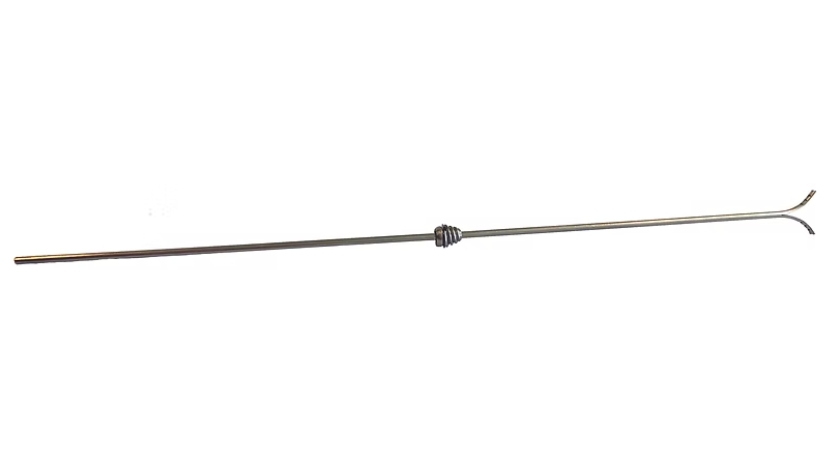
The Meduloc intramedullary fracture fixation system combines a strong, flexible nitinol implant with a deployable prong locking mechanism.
Looking Ahead
As technology and fracture fixation techniques continue to evolve beyond a stability-at-all-costs approach, expect a more balanced approach from companies that have a longstanding position in the space.
Sachinis envisions a future in which platform designs separate fracture reduction from fixation and allow surgeons to achieve precise alignment before locking in stability. She believes dynamic fixation approaches will eschew rigid immobilization, enable controlled micromotion and support natural bone healing. Sachinis pointed out the potential of integrated single-use systems that streamline procedures and reduce cumbersome instrument burdens.
There’s little doubt that the next phase of fracture fixation is moving toward approaches that prioritize biologic preservation, minimal invasiveness and procedural simplicity. The companies that react to these trends will be well-positioned for future growth.